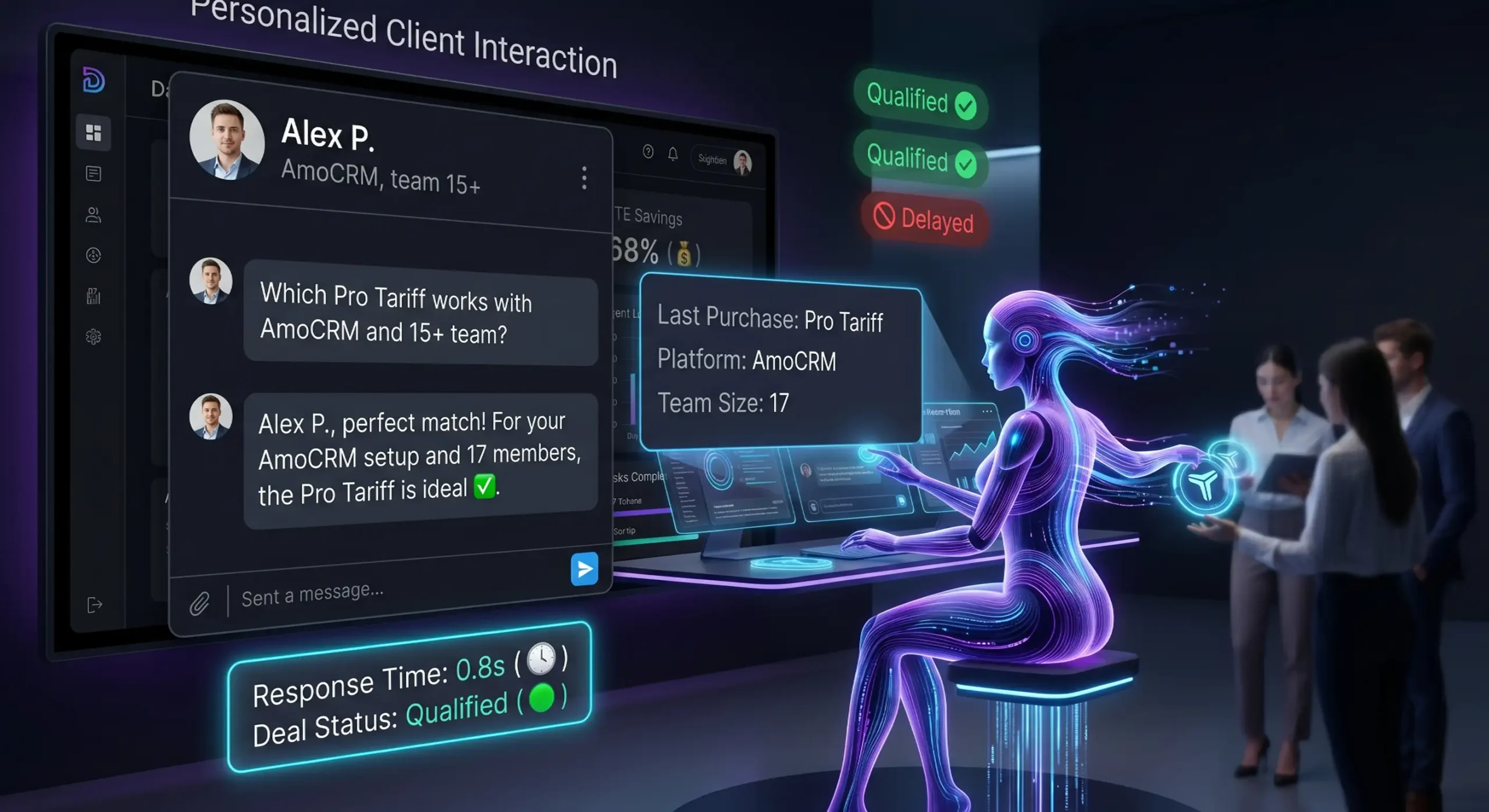
In today’s hyper-competitive market, the quality of customer interaction is no longer just a “nice-to-have”—it is a primary driver of growth. For too long, businesses have relied on basic chatbots that frustrate users with rigid scripts and “I didn’t understand that” responses. However, the emergence of AI Agents for Customer Support and Sales has fundamentally changed the game. We are moving from a world of passive answering machines to a world of proactive, autonomous digital employees that can actually close deals and resolve complex technical issues without human intervention.
Chatbots vs. AI Agents: Why the Distinction Matters for Your Bottom Line
To understand the value of AI Agents for Customer Support and Sales, we must first distinguish them from the traditional chatbots we’ve used for the last decade. A traditional chatbot is a decision tree; it follows a predefined path. If the user deviates from that path, the bot fails.
An AI Agent, powered by advanced LLMs like GPT-5.5, operates on goals, not scripts. This shift allows for two critical business roles to be automated at a professional level:
- Autonomous Support Agents: These agents don’t just “suggest articles.” They can access your internal documentation, verify a user’s subscription status in your database, and solve the problem step-by-step, adjusting their tone based on the customer’s frustration level.
- AI SDRs (Sales Development Representatives): Instead of sending generic cold emails, an AI SDR can research a prospect’s LinkedIn profile, analyze their company’s latest news, and initiate a personalized conversation that leads to a qualified meeting booked directly into your calendar.
The Datcor Framework: How to Deploy AI Agents Successfully
At Datcor, we have implemented these systems for various clients, and we’ve found that success depends on a structured approach rather than “plug-and-play” installation. Scaling a business with AI requires a transition from simple automation to a complex agentic workflow.
Our proven implementation sequence consists of three main phases:
- Deep Audit of Communication Channels: We analyze where the most “leaks” occur in your sales funnel. Are leads dropping off during initial qualification? Is support overwhelmed by repetitive L1 tickets? Identifying the highest-friction point is where the first agent is deployed.
- Knowledge Base Engineering: An agent is only as good as its data. We transform messy internal PDFs and Notion pages into a structured “Source of Truth” that the agent can query with 100% accuracy, eliminating hallucinations.
- Iterative Scaling: We start with a “Minimum Viable Agent” (MVA) to prove the ROI. Once the agent consistently handles 30-50% of routine queries, we expand its capabilities to include API integrations with CRM systems like Salesforce or HubSpot.
Real-World Impact: Moving the Needle on KPIs
When you implement AI Agents for Customer Support and Sales, you aren’t just saving time—you are improving critical business metrics. In our experience, companies typically see:
- Reduced CAC (Customer Acquisition Cost): AI SDRs qualify leads 24/7, ensuring that your human sales team only spends time on high-intent prospects.
- Increased LTV (Lifetime Value): Instant, accurate support leads to higher customer satisfaction (CSAT) and lower churn rates.
- Operational Leverage: The ability to handle a 10x increase in lead volume without adding a single new headcount to the support or sales teams.
The transition to an agent-led business model is no longer a futuristic concept—it is a current competitive necessity. Those who continue to rely on rigid bots will find themselves outperformed by leaner, faster, and more responsive AI-driven competitors.
Related Reading: Explore how these technologies integrate into a broader strategy in our guide on AI Agents for Business, learn about automating client interactions in AI Agents for Customer Support and Sales.